Paediatrics in Primary Care
My plan to improve UK children’s healthcare
Our children deserve better healthcare.
Too many children are waiting in our hospital emergency departments, and as many as 40% may not need to be there.
NHS Primary Care is overstretched, with many GPs less confident treating little ones. The result is many babies, children, teenagers and parents turning to A&E, waiting for hours, worrying and sharing bugs. Simple medications and reassurance are often the solution.
Currently, paediatricians (doctors of children) live in hospitals. GPs sometimes have extra training in paediatrics but often only have four months or less of clinical experience. They see and treat people of all ages but predominantly adults in our ageing population. The complexities of rapidly changing children inevitably see many referred to specialists in secondary care who are also overwhelmed. Up to 15% of paediatricians leave during training due to reasons like burnout.
The NHS Long Term Plan has committed to “Improved care for children and young people. An extra 35,000 children and young people being treated through NHS-commissioned community services next year compared to 2014/15, growing to an extra 49,000 children and young people getting the care they need in two years’ time.”
We need Paediatricians in Primary Care.

A new doctor role & speciality training
I’m proposing a new specialist role of Paediatrician in Primary Care.
These ‘GPs for children’ would join or advise existing primary care practices, helping to keep the majority of children’s care in the comfort of the community, rather than referred to secondary care.
Training would last three years before receiving a Certificate of Completion of Training (CCT) like a GP. Based entirely within paediatrics, it would include typical SHO ward & on-call training but heavily feature paediatric emergency medicine, children & adolescent mental health (CAMHS) and clinic referrals from primary care under consultant supervision.
The role would be overseen by the Royal College of Paediatrics & Child Health (RCPCH) or Royal College of GPs (RCGP) - from my correspondence, the latter recognises the need but currently has no resources or mandate to explore it nationally. This may change if progress is made locally.
Why Paediatricians in Primary Care?
Introducing Paediatricians in Primary Care could deliver significant improvements for all stakeholders, including patients, secondary care staff and the clinicians themselves. Healthcare access, outcomes, workloads, costs and staff wellbeing all stand to benefit considerably.
Greater
+ Social equality - better access to childcare expertise will create better health outcomes & future prosperity.
+ Expert care - improve management of chronic conditions in children that often differ from adults.
+ Continuity of care - more likely to see one paediatrician during childhood than relying on GP availability. Especially helpful for chronic conditions.
+ Community care - children can attend comfortable & tailored settings, rather than overwhelming busy hospitals.
+ Doctor retention - keep paediatricians who otherwise leave due to hospital & antisocial hours demands.
Fewer
- Hospital attendances - fewer children need to seek specialist advice only available in a hospital.
- Waiting times - reduce the number of non-urgent children waiting, potentially impacting urgent cases.
- Doctor loads - fewer children seen by senior hospital doctors, allowing them to focus on complex cases.
- Burnout - fewer doctors feeling overwhelmed by patient numbers or lack of choice, improving wellbeing & morale.
- Costs - save money by reducing visits to senior hospital doctors & preserving the paediatrician workforce.

How would it work?
Paediatricians in Primary Care would serve as specialist contacts for children and families in the community, complementing - not replacing - GP expertise.
Paediatric hub & spoke centres could be established to provide expertise and services to GPs in the local area. GPs could refer children to the hub or call the duty paediatrician for advice. Larger GP practices & networks could benefit from a permanent embedded specialist as part of their team.
Most non-urgent conditions could be managed locally, reducing hospital referrals. Urgent and acute cases would be escalated swiftly to secondary care. Chronic conditions could benefit from better community-based oversight - helping address the UK’s high childhood asthma mortality and slow diagnoses of conditions like Duchenne’s muscular dystrophy. Pathways like CPIP could also be managed in primary care, easing pressure on hospitals.
Some GPs worry this role might limit their paediatric involvement, but these doctors would work alongside them, enhancing the breadth of children’s services and keeping them out of hospitals, rather than replacing GP care.
Some suggested services
Non-urgent consultations
Children & adolescent mental health services, incl. depression, learning difficulties & eating disorders
Congenital & chronic condition care
Physiotherapy, dietetics, speech & language
School supports & consults
Urgent treatment centres in larger hubs
Safeguarding vulnerable children in the community
Newborn & infant physical examinations
Post-surgical reviews
Sexual health
Three Primary Care Systems
In a 2010 survey, 12 European countries use general practitioners (GP) to assess children in the community, 7 use paediatricians, and 10 use both. I’m proposing we develop a combined system.
Paediatrician led (24%): Cyprus, Czechia, Greece, Israel, Slovakia, Slovenia, Spain.
GP led (41%): Bulgaria, Denmark, Estonia, Finland, Ireland, Latvia, Netherlands, Norway, Poland, Portugal, Sweden, United Kingdom.
Combined (35%): Austria, Belgium, France, Germany, Hungary, Iceland, Italy, Lithuania, Luxemburg, Switzerland.
Map adapted & information from “Paediatric primary care in Europe: variation between countries”, van Esso D, del Torso S, Hadjipanayis A, et al, Paediatric primary care in Europe: variation between countries, Archives of Disease in Childhood 2010; 95:791-795.
What do the studies say?
-
“The concept of the generalist paediatric practitioner is not new. As far back as 1976, the Court Report Fit for the Future introduced the concept of the GP Paediatrician, intended to be a GP with additional training providing services to children. Three decades later, the Royal College of Paediatrics and Child Health suggested that paediatricians should take over the care of all children, and follow the USA and European practice in developing the concept of primary care paediatricians."
Gerada C. Child health: general practitioners (GPs) and the care of children and young people. London J Prim Care (Abingdon). 2010;3(1):8-9. doi:10.1080/17571472.2010.11493288
-
“Paediatric emergency attendances and admissions are rising year-on-year [source], and greater intervention at the primary and community level is needed to prevent unnecessary hospitalisation of children. Our findings show that beds in general paediatric wards are being occupied by [up to 6% of] children with mental health problems. This is not an appropriate location for children in acute mental distress and reflects a lack of community resources and a need for better integration of care.”
“Snapshot of general paediatric services and workforce in the UK”, published in 2020 by the RCPCH
-
“One concerning observation is that many children who end up in urgent and emergency settings do not necessarily require such care. Despite the high attendance rates, there was no proportional increase in admissions. A recent study revealed that approximately 40% of paediatric ED attendances are likely to be classified as 'non-urgent,' with an even higher proportion observed among young children and out-of-hours visits. The challenges in accessing primary care and the higher demand for primary care services are key drivers behind the influx of patients seeking urgent and emergency care.”
— “Right Place, Right Care: Learning the Lessons from the UK Crisis in Urgent & Emergency Care in 2022”, published in 2022 by the Royal College of Emergency Medicine (RCEM), contributed by the Royal College of Paediatrics & Child Health (RCPCH).
-
“A large number of ED presentations in children within a large English region are NUAs (non-urgent attendees) and do not require the care provided by a type 1 ED. Our data suggest there are particular groups of children for whom targeted interventions would be most beneficial. Children under 5 years would be such a group, particularly in providing accessible, timely care outside of usual community care opening hours.”
— Simpson RM, O'Keeffe C, Jacques RM, et al, Non-urgent emergency department attendances in children: a retrospective observational analysis, Emergency Medicine Journal 2022; 39:17-22.
-
“Over the past decade [2007 to 2017] since National Health Service primary care reforms, GP consultation rates have fallen for all children, except for infants. Children’s use of hospital urgent and outpatient care has risen in all ages, especially infants. These changes signify the need for better access and provision of specialist and community-based support for families with young children.”
Ruzangi J, Blair M, Cecil E, et al, Trends in healthcare use in children aged less than 15 years: a population-based cohort study in England from 2007 to 2017, BMJ Open 2020;10:e033761. doi: 10.1136/bmjopen-2019-033761
-
“Rising needs in the child population and demand from families are most likely contributors to the patterns of overall increasing healthcare use by children seen here. 8 Preterm birth is increasing and is the single biggest cause of neonatal morbidity and mortality in the UK and other countries where survival rates are increasing. 25 Thus, rising emergency admissions in infants could be explained by a growing morbidity burden in infants compared with other children. Recurrent admissions in children and young people with chronic conditions contribute substantially to total emergency admissions.” 26
Ruzangi J, Blair M, Cecil E, et al, Trends in healthcare use in children aged less than 15 years: a population-based cohort study in England from 2007 to 2017,, BMJ Open 2020;10:e033761. doi: 10.1136/bmjopen-2019-033761
-
“Hospital emergency care may be appropriate for many children and young people but there are also those who may, with appropriate support, be safely cared for outside an emergency care setting. This report has identified potential areas where improvements in care outside the hospital emergency care setting may lead to reductions in A&E attendances and emergency admissions.
However, if there are insufficient resources and alternatives to the emergency hospital care setting or other weak links in the system, it may become difficult to reduce hospital emergency care activity and improve quality of care for children and young people.”
Keeble E, Kossarova L, Watch Q. Focus on: emergency hospital care for children and young people. what has changed in the past 10 years? research report, 2017.
-
“Of 115 000 children attending the ED over the study period, a complete set of data were available for 13 099 categorised as ‘GP appropriate’; of these, 8404 (64.2%) were managed by GPs and 4695 (35.8%) by ED staff. Median duration of ED stay was 39 min in the GP group and 165 min in the ED group. Children in the GP group were less likely to be admitted as inpatients and less likely to wait >4 hours before being admitted or discharged, but were more likely to receive antibiotics. Treatment costs were 18.4% lower in the group managed by the GP.”
Leigh S, Mehta B, Dummer L, et al. Management of non-urgent paediatric emergency department attendances by GPs: a retrospective observational study. Br J Gen Pract. 2020;71(702):e22-e30. Published 2020 Dec 28. doi:10.3399/bjgp20X713885
(P values, odds ratios and confidence intervals removed for readability)
Connecting Care for Children
Connecting Care for Children (CC4C) is a long-running example of integrated paediatrics in practice. Launched in North West London in 2014 by Imperial College Healthcare NHS Trust, the model places hospital paediatricians into local GP practices, forming “child health hubs” where primary and secondary care teams regularly collaborate.
The focus is on relationships, not just referrals. Through joint clinics, multidisciplinary team meetings, and informal advice, professionals build trust and confidence - leading to faster, more effective care close to home.
The results are striking:
81% reduction in outpatient appointments
22% fewer A&E attendances
17% drop in hospital admissions
100% of clinicians said they were likely to apply clinic learning in future practice
The model now spans over 20 boroughs and has inspired similar approaches across the UK. CC4C shows that when care is integrated and local, it not only improves access and outcomes — it also supports and upskills the teams delivering it.
Data from CC4C, and Montgomery-Taylor, S., Watson, M. and Klaber, R. (2015) 'Child Health General Practice Hubs: a service evaluation', Archives of Disease in Childhood, 101(4), pp. 333-337.
Healthcare use in children by age groups over 2007 - 2017, showing rising use of outpatient & emergency visits while primary care plateaus.
(Ruzangi et al., 2020)
| Category | GP (£) | ED (£) | Difference (£) |
|---|---|---|---|
| Staff salaries | 82.81 | 46.00 | +36.81 |
| Observation/inpatient | 28.86 | 89.28 | -60.42 |
| Prescriptions | 3.09 | 3.29 | -0.20 |
| Investigations | 0.43 | 2.77 | -2.34 |
| Societal | 19.69 | 46.87 | -27.18 |
| Total | 134.88 | 188.21 | -53.33 |
Cost breakdown of children’s visits to ED & GP in a retrospective observational study, showing significant savings in primary care - 28% cheaper.
(Leigh S, Mehta B, Dummer L, et al., 2020)
“We are failing our children and young people in the UK. Earlier this year, research showed that UK childhood mortality is higher than in a comparable group of wealthy countries for common infections and multiple non-communicable diseases. The UK, for example, has the highest rate of childhood asthma deaths in Europe due to poor chronic disease management despite good national guidelines. Delays in diagnosis of Duchenne’s muscular dystrophy in the UK are among the longest in Europe, being only marginally better than in the 1970s, mainly due to lack of recognition of delayed motor development in primary care."
“We as paediatricians need to do something urgently and differently to address the shocking outcomes for children in the UK. Primary care paediatricians, I believe, are the way forward. I hope the Presidents of the RCPCH and Royal College of General Practitioners can work together to agree on a curriculum and training schedule and make primary care paediatric posts available throughout the UK.”
— Dr Newmon, Consultant Paediatrician, BJGP, 2020

Keeping our Paediatricians
We are losing too many paediatricians in the NHS - up to 15% in a 2015 survey. This is for various reasons including seeking a better work-life balance, burnout, and disruptive work patterns like nights & on-calls. The number of aspiring community paediatricians is also declining to 12% by 2030.
We could retain more of the paediatric workforce by offering an alternative path that may offer better work-life balance out-of-hospital. Children in the community would benefit from specialist care in tailored settings, hospital paediatrician loads could decrease, hospital costs & waiting times could be reduced, and primary care paediatricians could enjoy a more fitting career.
“Community Paediatricians play a critical role working with vulnerable children, including those with developmental disorders and disabilities, complex behavioural presentations, and at risk of abuse or are being abused, all growing areas of concern. It is therefore especially concerning that the proportion of paediatricians working in this sub-speciality is forecast to decrease from around 18% to 12% of the workforce in 2030, based on the last ten years of trends.”
“The attrition rate of trainees leaving the paediatric training scheme between the 1st year and 3rd year of training was 15%. Of those still training in paediatrics after the 3rd year, 38.7% intended to be subspecialty paediatricians, 25.7% general paediatricians, 5.4% community paediatricians and 3.5% academic paediatricians.”
2025: The NHS 10 Year Plan
I first began exploring this idea in 2024. Since then, I’ve joined GP training and the NHS 10-Year Health Plan has been published, and the alignment is striking. The plan calls for more care in the community, stronger neighbourhood services, and earlier prevention - all principles that a Paediatrician in Primary Care role naturally delivers.
Embedding paediatricians within neighbourhood hubs would make the plan’s ambitions real for children: faster access to the right expertise, fewer unnecessary hospital visits, and stronger support for GPs by motivated specialists. It’s a simple, practical way to bring the 10-Year Plan to life for families, and a natural addition to the NHS’s future model.
I need your help
This isn’t a small project. I need support from all levels of healthcare - clinicians, patients and management - at local, regional & national scope.
My next step is securing funding to collect evidence and build the financial business case needed to turn this vision into reality.
Please get in touch if you can help or just want to support me. Thank you.
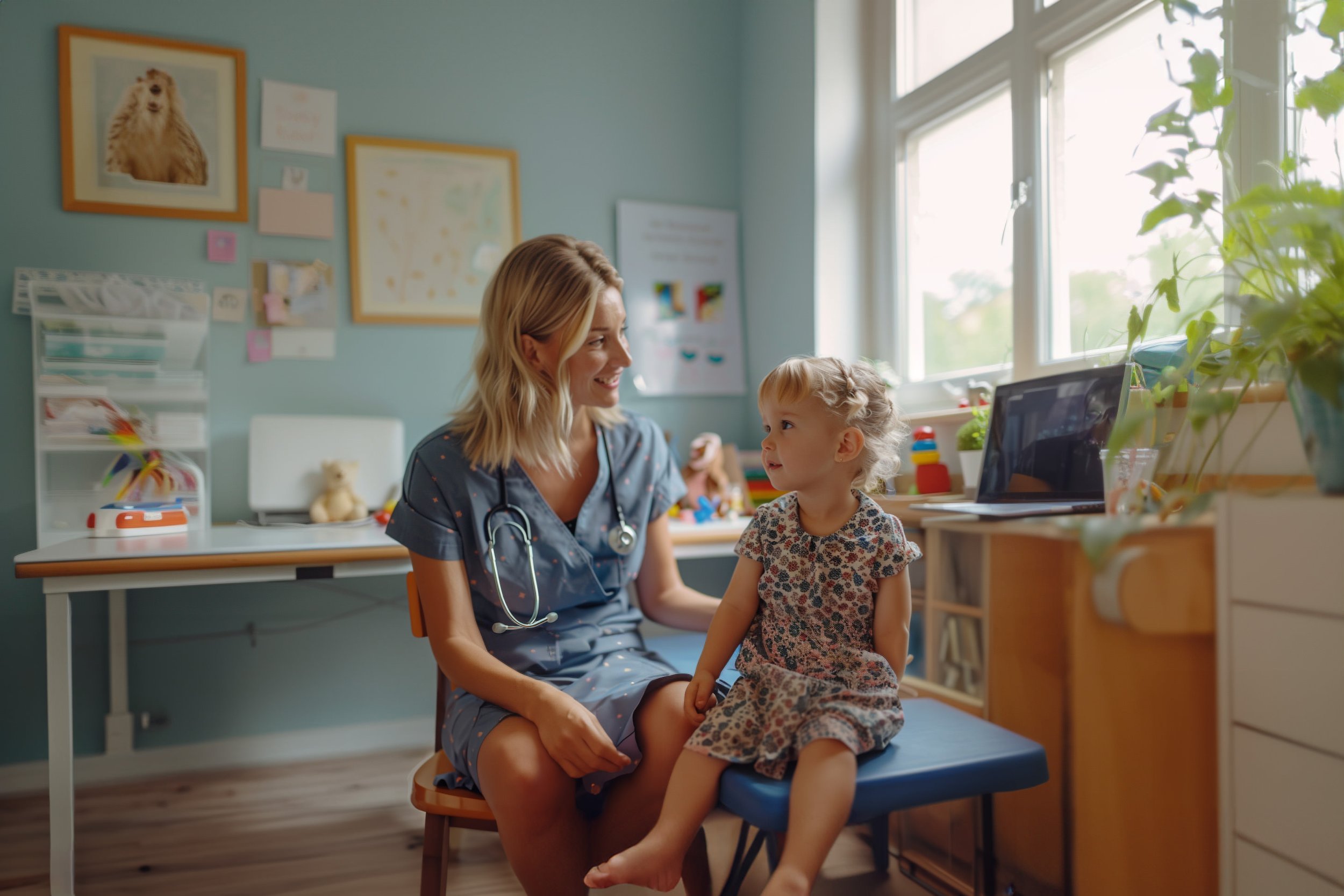
All images created using Midjourney AI.